
Process · · 6 min read
What happens after you send the brief
Four steps, one production floor, and the handful of decisions that set everything downstream.
Most apparel orders go wrong in the first week, not the last. Not because a machine failed, but because a decision was left vague — a colour agreed in words rather than on a swatch, a logo placement described as “on the chest”, a delivery date set before anyone counted the sizes. By the time those show up on the floor, they are expensive.
So it is worth knowing what actually happens to a brief once it reaches us, and where your attention is worth the most.
One. The brief
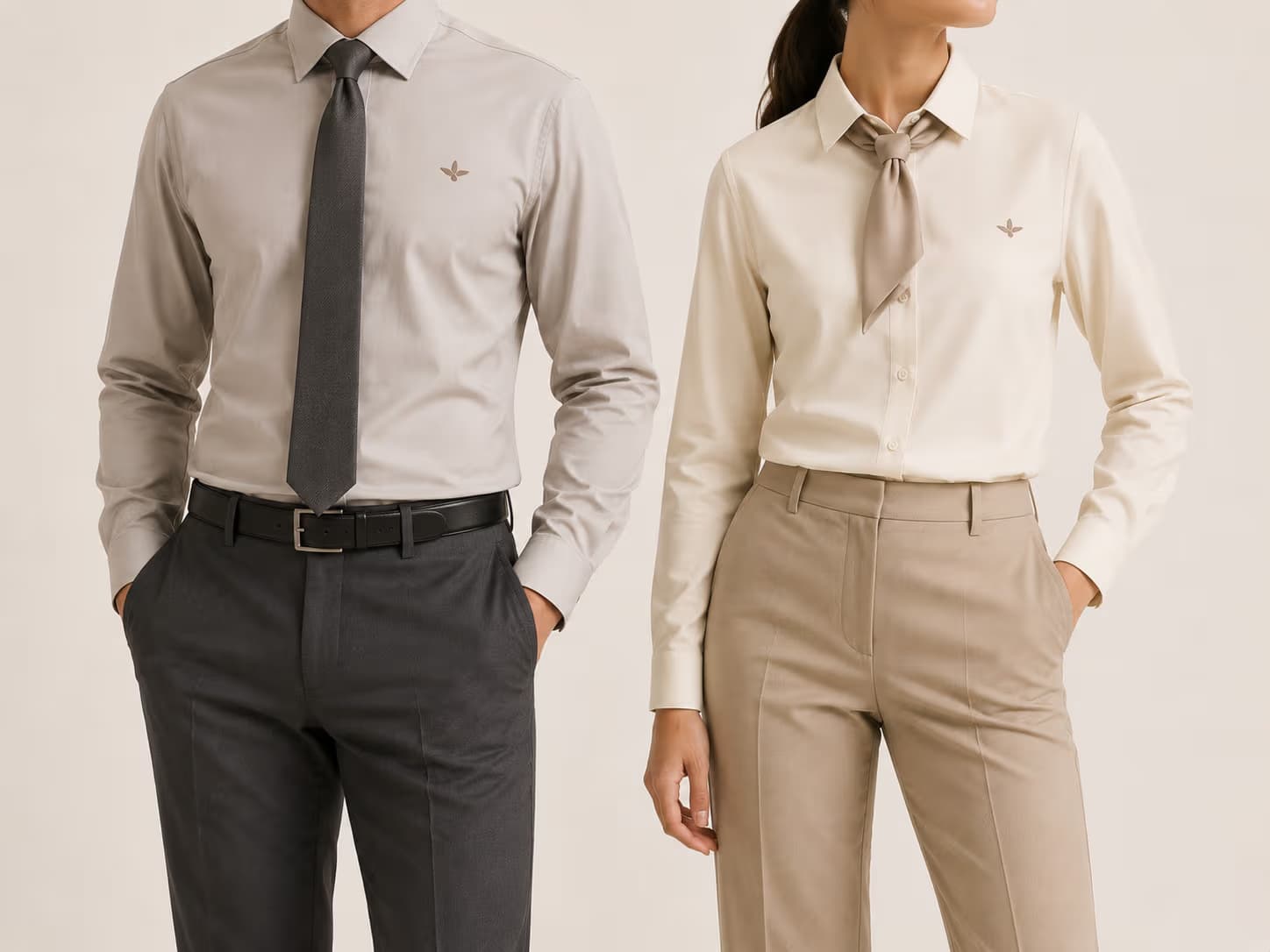
Tell us what you need, who it is for, where it is going, and how sharp it needs to look. That last one is not a pleasantry. A polo for a warehouse team and a polo for a hotel's front desk are different garments, and knowing which you want changes the fabric before anything else is decided.
The most useful brief we receive is rarely the longest. It answers four things: quantity, deadline, where the logo goes, and one reference of something you liked.
Two. The fit
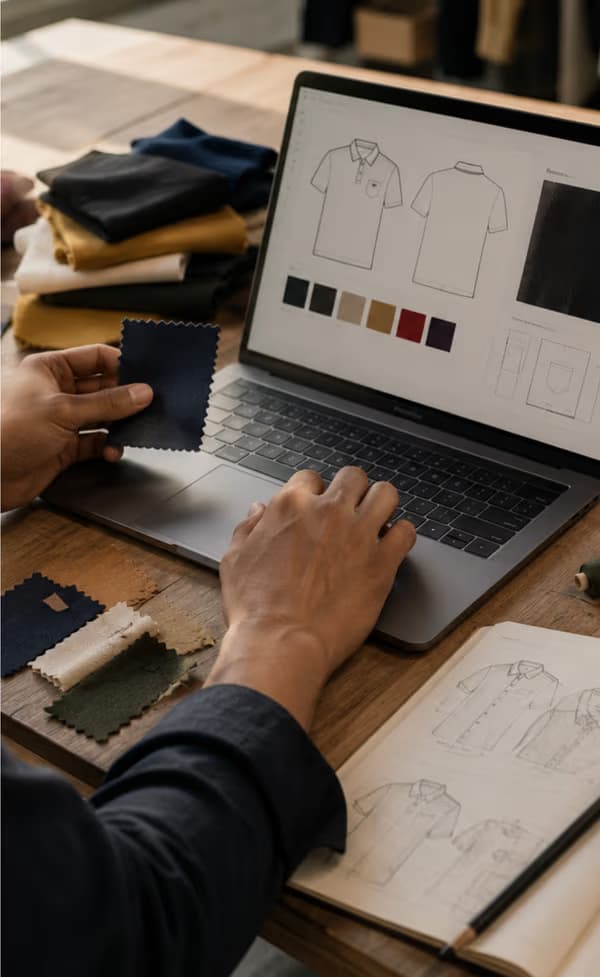
Product, fabric, colour, quantity, finish, logo placement and label tier. Six of those seven are reversible on paper and expensive once cut. This is the stage that rewards being slow.
- Fabric weight decides how the garment hangs and how it survives washing.
- Colour is approved on a physical swatch, never on a screen.
- Logo placement is marked on a size sample, not described in an email.
- Label tier is the difference between a garment that reads as merchandise and one that reads as a brand.
Three. The floor
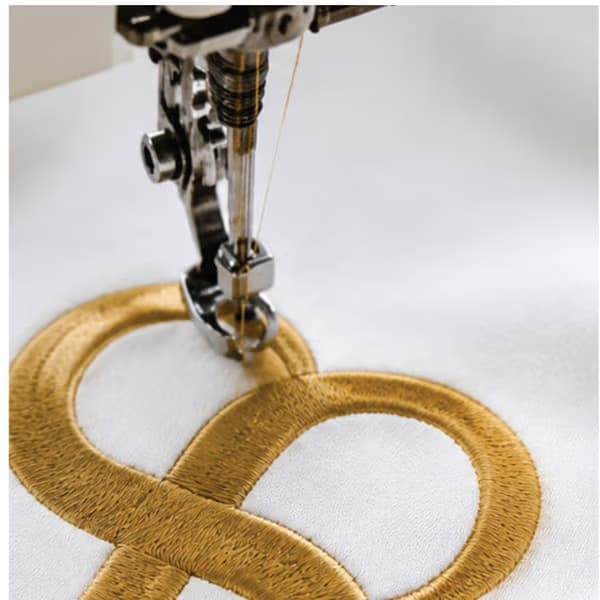
Printing, embroidery, stitching, finishing, quality checks and packing all happen in the same building. That is not a boast about scale, it is a statement about accountability: when a stitch line drifts, there is one team to correct it and no vendor to chase.
The advantage of one floor is not speed. It is that nothing gets to hide between two companies.
Four. Delivery
The order arrives folded, labelled and counted, ready to wear and ready to represent. Every size run is kept on record, so the reorder in eight months is the same garment and not a close cousin of it.
That is the whole of it. Four steps, no mystery vendors, and one production floor that has been running since 1990.