
Materials · · 5 min read
How to read a fabric weight
GSM is the single number that predicts how a garment will feel, hang and last. Here is how to use it.
Ask two suppliers for a 100% cotton t-shirt and you can receive two garments that share a fibre and almost nothing else. The number that explains the difference is GSM: grams per square metre, the weight of the fabric itself.
What the numbers feel like
- 140–160 GSM — light. Drapes, breathes, and shows what is underneath. Good for events in summer heat, poor for anything that needs to look substantial.
- 180 GSM — the everyday middle. Most promotional tees live here.
- 200–220 GSM — the weight most people mean when they say a shirt feels good. Holds its shape through a wash cycle and does not cling.
- 240 GSM and up — heavyweight. Structured, boxy, premium in the right cut and hot in the wrong one.
Weight is not quality
It is tempting to read heavier as better. It is not. A 240 GSM shirt for outdoor staff in a Gulf summer is a mistake regardless of how good it feels in a showroom, and a lightweight fabric with a good yarn will outlast a heavy one with a cheap one.
Choose the weight for the shift the garment has to survive, not for the moment someone picks it up.
The other numbers
Two garments at the same GSM can still differ. Knit structure changes everything: single jersey is smooth and light-feeling, piqué has the texture that makes a polo read as a polo, and a heavier interlock feels denser at the same weight. Yarn quality decides how the surface looks after twenty washes, which is where cheap fabric announces itself.
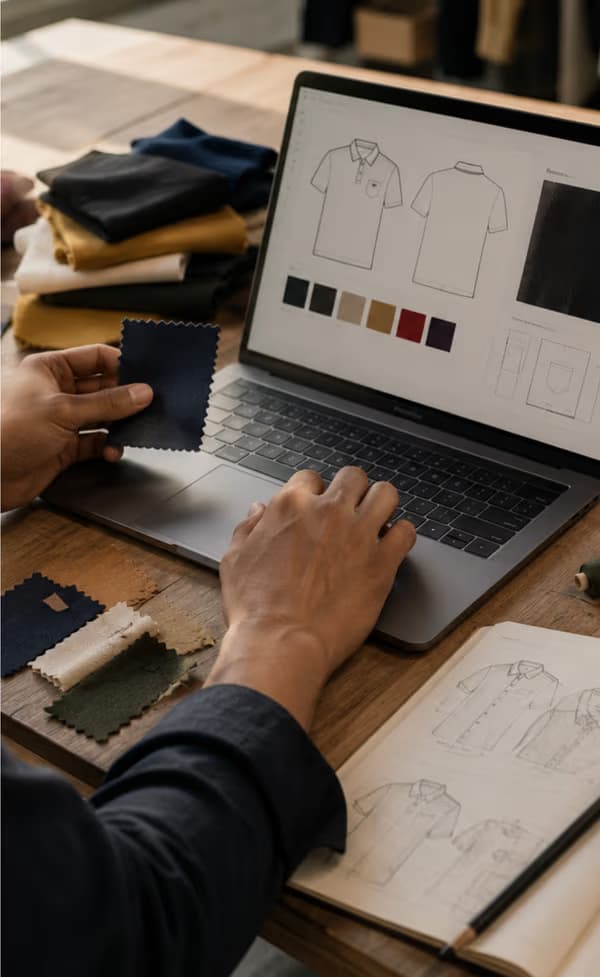
So ask for the GSM. Then ask to hold the swatch, because the number tells you what to expect and the cloth tells you whether you were right.